



Main About Articles

Company blog

What Makes Forex Broker Software Efficient for Your Business?

What Makes Forex Broker Software Efficient for Your Business?


In today’s fast‐evolving financial landscape, you need advanced forex broker software to stay at the top and as the global market is continuously growing, it’s no surprise that it solely relies on the optimal functioning of brokerages. With the ever-expanding changes in technology expected by 2025, simply being fast and reliable will not cut it, rather clenches on much tighter aspects such as automation, risk mitigation, and liquidity, together with advanced integration and vouched customer support. This onboard in the new ecosystem of the market does cause disruption and enables a surge in value for their clients which is the dire focus of this article and why it is important to choose the right forex broker solutions.


The Foundation of Efficiency: Integration and User Experience

Any forex brokerage is built on the backbone of a well-developed and advanced trading platform that gives clients access to multiple systems simultaneously. Forex broker software is expected to combine many functions into a single user-friendly interface which is straightforward, to say the least. This is why having the right brokerage solutions, integration with trading platforms, and risk management systems for liquidity providers is paramount.


For example, the most modern platforms are based on an intuitive approach to traders that integrates high-speed order submission and requires little time to learn. Advanced charting, market feeds, and customizable dashboards have become commonplace not only to enhance branding but also to improve user decisions and help users make smarter trades. Industry insiders have noted that in contemporary trading, thick-client interfaces are used to modernize the trading experience and allow novice and professional traders to move from a command-driven experience to an engaging, self-service one.


Robust Risk Management and Liquidity Integration

In 2025, effective solutions for forex brokers take into account the importance of liquidity and risk management. With increasing volatility in the forex market, sophisticated risk management systems are a must for the safeguarding of both the brokerage and its clients. Forex software today includes automatic stop losses, margin and leverage, and real-time risk dashboards that allow brokers to constantly control exposures. This is critical in minimizing losses and ensuring that trading remains within acceptable risk parameters.


Moreover, linking with various liquidity providers guarantees that your platform will always make tight spreads and good-quality pricing available. A proficient forex brokerage solution combines liquidity from several sources, resulting in attractive bid/ask spreads and minimal slippage during active trading periods. As several other industry reviews have noted, one of the leading reasons for remaining actively involved in trading is satisfaction with the ability to access deep liquidity pools and how it enhances trading conditions.


Automation and API Connectivity

Modern forex broker software also benefits from the automation of primary administrative functions. The ability to instantly copy trades, sophisticated order routing, and robust API integration not only make business processes more efficient, they also mitigate exposure to human errors. Automation allows standard actions such as executing trades, updating accounts, or even generating reports to be done by the system, which enables your staff to concentrate on more strategic aspects of the business.


From algorithmic trading to third-party risk assessment and even advanced CRM, external applications can be integrated with ease through APIs. This connectivity helps foster an adaptive environment where rapid modifications for business can be made in relation to market shifts. Studies have shown that forex brokerage solutions that utilize automation combined with API integration have increased the level of operational efficiency and client satisfaction.


Customer Relationship Management: The Heart of Broker Efficiency

A well-integrated CRM facilitates the efficiency of forex broker software. Forex brokerages serve a varied clientele that ranges from single retail traders to big institutional investors. The sheer volume of this client data presents an overwhelming task, even more so when done manually.


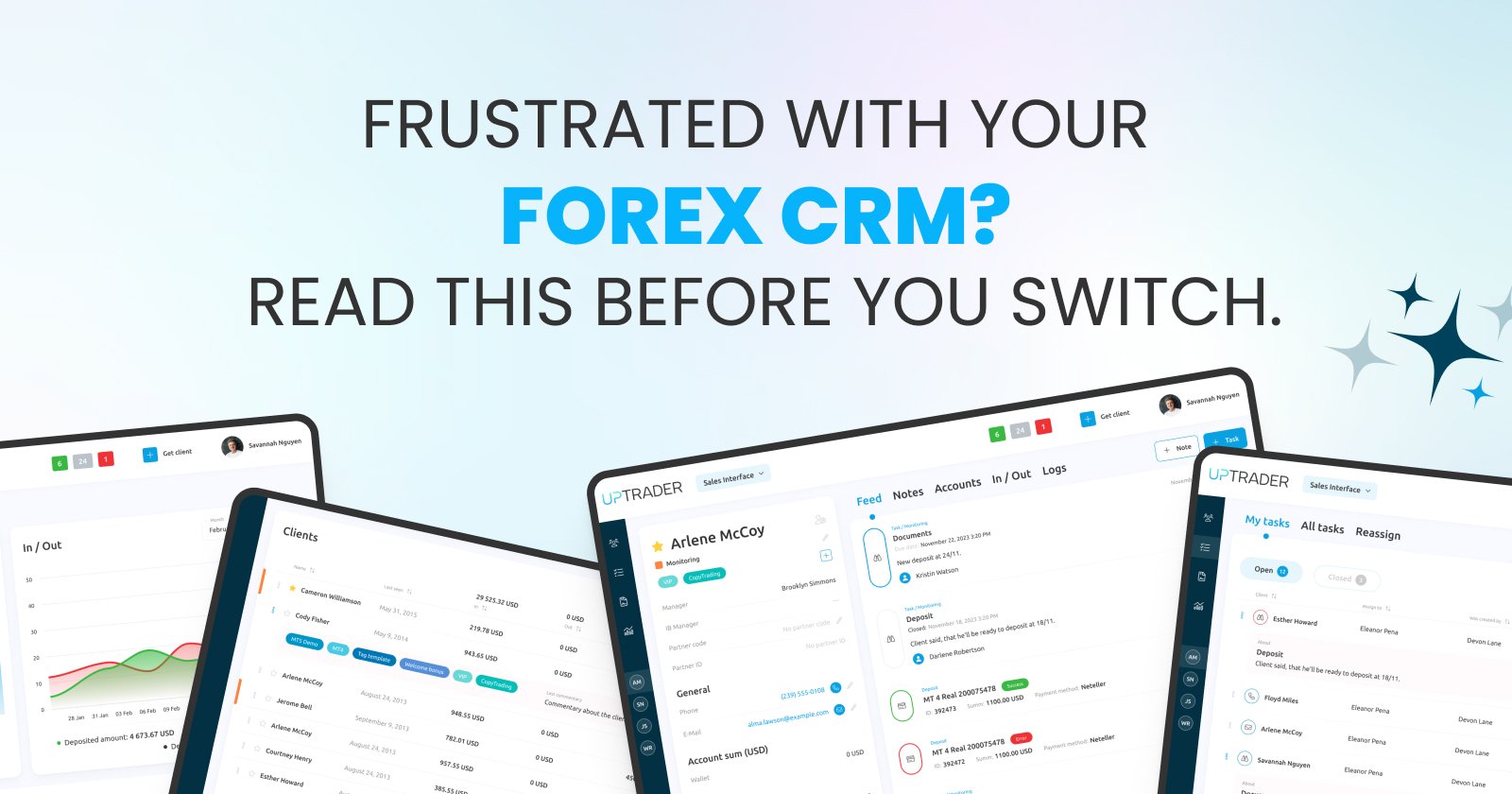
Modern Forex software solutions are equipped with client relationship management systems that are capable of consolidating all client data into a single directory. These systems go a step further to dramatically enhance the onboarding process together with KYC/AML procedures and even facilitate marketing campaigns. Brokers build strategies to engage with their customers based on their trading behavior and preferences and thus improve retention rates. Better integration of CRM systems also helps increase client satisfaction. 


As a result, companies experience more profits. Advanced CRM systems have also proven their worth as brokerages utilizing them respond to client needs and changes in the market much faster. With better focus on and research into the client’s needs, these brokerages have shown increased productivity.


Customization and Scalability: Tailor-Made for Growth

Not all brokerages are the same. That is why scalability and customization are critical. Effective forex broker software is supposed to be adaptive to business growth. It should also facilitate expansion into new markets, allowing the broker to increase its sphere of competitiveness.


White-label solutions are increasingly popular as they offer a cost-effective way to launch a fully branded trading platform quickly. They come pre-equipped with essential modules  —  ranging from trading and risk management to back-office systems and CRM tools  —  yet still allow for sufficient customization to reflect your brand’s unique identity. Scalability ensures that as your client base grows and trading volumes increase, your software can handle the higher load without compromising performance. In essence, the right forex broker solutions not only meet your current requirements but also have the agility to evolve with the market dynamics.

.

Regulatory Compliance and Security

Regulatory compliance is non-negotiable in the forex industry. As brokerages face increasingly strict regulatory scrutiny, the efficiency of forex broker software is also determined by its ability to ensure compliance with international standards. This includes maintaining detailed records of client interactions, monitoring trades, and generating reports for regulators  —  all while safeguarding sensitive data with state-of-the-art security measures.


Efficient software incorporates automated compliance tools that simplify the complex regulatory landscape. Integrated modules for KYC and AML checks, secure data storage, and audit trails ensure that your brokerage remains compliant while minimizing the risk of penalties. In today’s environment, where data breaches can severely damage a company’s reputation, robust cybersecurity features are just as critical as operational efficiency. A secure, compliant platform builds trust with clients and regulators alike, paving the way for sustainable growth.


Future Trends: AI, Blockchain, and Beyond

Looking forward, the evolution of forex broker software is set to be influenced by emerging technologies such as artificial intelligence (AI) and blockchain. AI-driven analytics can provide predictive insights that help brokers anticipate market trends and client behavior, further enhancing decision-making processes. For example, AI can help identify patterns in trading data, alerting brokers to potential risks before they escalate.


Blockchain technology, on the other hand, offers unparalleled transparency and security for transaction records. By leveraging blockchain, forex broker solutions can create immutable audit trails that not only simplify compliance but also improve the overall trustworthiness of the platform. These advanced technologies are set to redefine efficiency in 2025 and beyond, making it imperative for brokerages to adopt solutions that are both innovative and forward-thinking.


Conclusion

In summary, efficient forex broker software in 2025 is characterized by its robust integration capabilities, advanced risk management tools, automation, and seamless CRM integration. Forex broker solutions today are not simply about executing trades  —  they are comprehensive ecosystems that support every facet of your brokerage’s operations. From ensuring rapid, reliable trade execution to safeguarding regulatory compliance and providing a scalable, customizable platform, modern forex software empowers brokerages to stay competitive in a rapidly evolving market.


Investing in the right forex brokerage solutions can transform your business. By choosing a platform that incorporates cutting-edge technologies like AI and blockchain, supports a unified and intuitive user experience, and offers robust risk management and compliance features, your brokerage will be well-equipped to meet the challenges of tomorrow. Embrace the future with efficient forex software, and position your business for sustained growth and success in 2025.


You can implement a robust CRM (Customer Relationship Manager) solution like UpTrader to help automate tasks and bring attention to more important tasks. Talk to a consultant on our site today to get a personalized demo.


Request a demo here

Articles
FX Brokerage Solutions: Top 8 Features You Need in 2025

FX Brokerage Solutions: Top 8 Features You Need in 2025


The landscape of the Forex world is changing at an unprecedented pace. To remain relevant in the marketplace, Forex brokers need to constantly change their tactics, which is why technology is changing the entire landscape of the industry. In the next few years, it is forecasted that proprietary tools will be available that automate certain processes and improve the client’s trading experience. If you are looking into new FX brokerage solutions or ways to improve your current platforms, consider the eight essential aspects.


1. Advanced Trading Platforms with Seamless Integration

The current FX brokerage solutions are supposed to provide a sophisticated multi-asset trading interface for Derivatives like Forex and CFDs as well as for stock indices, commodities, and even cryptocurrencies. Cross-platform mobile trading has been achieved, so traders anticipate smoother integration capabilities in 2025.


Key aspects include:


  • Multi-Asset Support: A broker should be able to serve a wider pool of clients by developing a platform for trading multiple asset classes.


  • Customization and White Labeling: The platform must provide deep customization options to support broker branding.


  • Third-Party Integrations: Leading brokers offer real-time automated trading with advanced charting and drawing tools through Trading Platform 4/5, cTrader, or proprietary seamlessly integrated platforms.


Advanced trading platforms are the backbone of effective fx brokerage solutions. They not only enhance the trader’s experience but also streamline back-end operations — making it easier to manage risk and maintain liquidity. In today’s competitive environment, an innovative and integrated trading platform is essential for any Forex broker solution.


2. Stringent Regulatory Compliance and Risk Management

The Forex business has been and still is dependent on control. By 2025, brokers are expected to provide world-class compliant Forex solutions. FCA, CFTC, and ASIC, providers of brokerage services have worked relentlessly, and at this stage, they are expected to offer the most effective compliance and risk management systems.


Essential elements include:


  • Automated KYC/AML Systems: By using KYC and anti-money laundering options, brokers can bring in new clients faster and easier while still staying compliant.


  • Risk Management Dashboards: With the use of real-time risk monitoring tools, brokers and traders are capable of managing their exposure by tracking margin levels, stop loss/take profit orders, and overall portfolio health.


  • Negative Balance Protection: The crucial safety net means that clients trusting their funds with the broker cannot lose more than they have deposited with the broker, therefore protecting them against volatility in the Forex markets.


Every broker must ensure compliance, which helps instill client confidence. In the fast-changing environment, FX brokerage solutions will be expected to have advanced risk management features embedded – turning compliance into a marketing advantage.


3. Ultra-Low Latency Execution and High-Speed Connectivity

The world of Forex trading waits for no one, which is why every millisecond is vital. As the years pass and technology becomes more integrated, the execution hosting speed becomes a higher priority and low latency becomes a certain requirement. In the year 2025, any provided solution from an FX broker will be expected to have a rapid order execution system in place with little to no slippage regarding order fills. These expectations especially exist for the volatile trading markets where price movements are extreme.


Key performance factors include:


  • High-Speed Infrastructure: The addition of high-performance servers along with direct market access (DMA) technology makes it possible for traders to retrieve information nearly instantaneously.


  • Low-Latency Connectivity: Traders will have a much better experience when connecting with main liquidity providers as they will receive the highest bid without any higher prices being set against them. This will also decrease the chance of having requotes placed during trading.


  • Optimized Routing Systems: When smart order routing systems are integrated, traders can drastically increase their profit margins as these systems assess market conditions and execute orders at the best available prices.


The trading algorithms of modern-day Forex brokers ensure low latency trading, but this seems to be the major concern for algorithmic and high-frequency traders. The large majority of traders base their profits on short-term market openings, and without near-instant execution, it makes it hard to close trades quickly.


4. Integrated Payment Processing and Liquidity Management

For a brokerage to function efficiently, access to deep liquidity together with providing easy deposit and withdrawal systems is essential. As mentioned earlier, these aspects of FX brokerage are ignored far more often than they should.


Key components include:


  • Multiple Payment Methods: Even non-customers would want the payment methods to go beyond bank transfers to facilitate the use of credit cards debit cards e-wallets or even crypto funds.


  • Automated Payment Gateways: Faster and safer execution of deposits and withdrawals increases client satisfaction while improving cash flow management.


  • Liquidity Aggregation: Connecting to several liquidity providers helps maintain a low spread and high market depth. Aggregation tools can blend DN and non-DN liquidity for traders, ensuring the best-prevailing prices.


Overcoming challenges of efficient liquidity and payment processing is essential for the complete integration of any Forex solutions for brokers. They aid in the operational efficiency of the brokerage, while at the same time offering competitive prices and hassle-free trading to the clients.


5. Customizable User Experience and Client Management Tools

In today’s modern marketing where the customer is king, the trading experience should be customized and effortless. More emphasis is being placed on custom applications by modern Fx brokerage solutions for novice and seasoned traders alike.


Features to prioritize include:


  • Intuitive Interface Design: Traders are now able to view and manage their asset positions and trade activities in an updated and personalized modern dashboard, which improves the user experience overall.


  • Client Relationship Management (CRM): Brokers can store all information from the interactions with the clients under one system to analyze their trades.


  • Customized Trading Tools: Custom alerts, self-defined risk controls, and personalized charting are some features that will significantly enhance user experience.


By varying the trading terms and the scope of service provided to brokerage customers, client retention is easily achieved and differentiation in a crowded market is more productive. The strategies of efficient Forex brokers center around easy access and modification, thereby building strong and long-lasting client relationships.


6. Advanced Analytics and Real-Time Reporting

Access to data remains the most important part of any service in today's financial industry. This means Forex brokers need access to advanced analytics as well as reporting tools that operate in real-time to successfully manage their operational functions and formulate strategies. By 2025, it is expected that robust analytical capabilities will be commonplace in top-tier FX broker solutions.


Important features include:


  • Real-Time Dashboards: A broker should have dashboards that are interactive and provide accurate information at any time regarding the trading volumes in live time, client activity, risk exposure, and even market trends.


  • Customizable Reporting Tools: Brokers need to be able to detail custom reports that cover important performance indicators, key financial metrics, and previous trade history to prepare internal audits and regulatory compliance.


  • Performance Monitoring: Brokers can optimize their service offerings and adjust their marketing strategies based on tools that analyze and monitor trader performance.


With advanced analytics, brokers not only enhance the operational aspects of the organization but also provide traders with useful insights about their performance. By leveraging data in real-time, Forex broker solutions can implement strategic changes that shift the company towards greater profitability and better client outcomes. 


7. Robust Security and Data Protection

As cyber threats continue to grow in sophistication, security remains one of the top priorities for FX brokerage solutions. Protecting sensitive financial data and ensuring secure transactions are critical for maintaining client trust and meeting regulatory requirements.


Key security features include:


  • SSL Encryption and Two-Factor Authentication (2FA): These basic yet essential security measures ensure that client data remains confidential and that unauthorized access is prevented.


  • Regular Security Audits: Continuous monitoring and regular security audits help identify vulnerabilities and implement corrective measures before breaches occur.


  • Data Protection and Backup Systems: Robust data backup and disaster recovery systems ensure that critical information is not lost in the event of a cyberattack or system failure.


  • Compliance with Global Security Standards: FX brokerage solutions must adhere to international standards such as ISO/IEC 27001 to ensure that their security practices are state-of-the-art.


A secure trading environment is non-negotiable in today’s digital world. Brokers that invest in advanced security features demonstrate their commitment to protecting their client’s assets—an essential factor in building long-term trust and loyalty.


8. Innovative Technology and Scalability

Finally, the ability to scale and integrate innovative technologies will set the best Forex broker solutions apart in 2025. As trading volumes increase and client bases expand, the underlying infrastructure must be robust enough to handle high traffic and evolving market demands.


Features to consider include:


  • Modular Architecture: A system that allows brokers to add or remove features without disrupting existing operations ensures long-term flexibility.


  • API Integrations: Open APIs enable seamless integration with third-party tools, such as algorithmic trading systems, external analytics platforms, and additional liquidity providers.


  • Cloud-Based Solutions: Leveraging cloud technology can improve scalability, reduce hardware costs, and provide a flexible, on-demand resource environment.


  • Adoption of Emerging Technologies: Embracing trends like blockchain for enhanced transparency, artificial intelligence for predictive analytics, and machine learning for adaptive risk management can offer significant competitive advantages.


The capacity to scale is a fundamental requirement for any modern FX broker solution. As the Forex market grows and becomes increasingly competitive, brokerages must ensure their systems can adapt and evolve. Innovation and scalability are not just features — they are strategic imperatives that enable brokers to thrive over the long term.


Conclusion

In 2025, the demands on Forex broker solutions are greater than ever before. To succeed in the dynamic world of Forex trading, brokers must invest in platforms that combine advanced technology with a deep understanding of client needs. The eight key features outlined above — advanced trading platforms, stringent regulatory compliance, ultra-low latency execution, integrated payment processing, customizable user experience, advanced analytics, robust security, and innovative scalability — are the cornerstone of effective FX brokerage solutions.


Whether you are searching for a new Fx broker solution or upgrading your existing system, these features will ensure you remain competitive in a rapidly evolving market. Top-tier Forex broker solutions not only streamline operations and enhance client satisfaction but also provide the tools needed to navigate the inherent risks of Forex trading.


By adopting a platform that embodies these eight features, you’re not just investing in software; you’re investing in the future of your brokerage. In today’s technology-driven market, the right FX brokerage solutions can make all the difference — driving growth, building trust, and paving the way for long-term success.


Embrace innovation. Enhance security. Optimize every trade. With these critical features in your Forex broker solutions, 2025 can be the year your brokerage truly transforms its trading experience.


If you're interested in taking advantage of facilities like CRM solutions, MAM and PAMM programs, Affiliate Programs, and Copy Trading platforms, speak to a consultant at our site and try UpTrader today.


Learn more and book your FREE demo here

Articles
Looking for a Trusted Forex CRM Provider in 2025? Consider 8 Crucial Aspects.

Looking for a Trusted Forex CRM Provider in 2025? Consider 8 Crucial Aspects.


The foreign exchange industry is changing at a fast pace, and brokers in 2025 will need smarter tools, more advanced strategies, and seamless client management. To remain competitive, businesses need to understand that selecting their Forex CRM provider is not purely a technical decision, but rather a strategic one as well. Forex CRM provider assists companies in streamlining operations, enhancing customer loyalty, and accelerating expansion. Nevertheless, with the multitude of options available, what is the most effective way to select the best Forex CRM for your brokerage?


Let us locate the eight factors that are important for your decision-making that you need to evaluate before picking a CRM For Forex Broker.


Customization

Every Forex brokerage has a distinct way of functioning. A generic Forex CRM software is bound to provide a set of common features, but it will fail to meet more specific needs. The appropriate provider should be a platform that offers deep customization, enabling you to tailor workflows, reporting dashboards, and client communication systems to your specific business model.


For instance, if your brokerage specializes in high-volume traders, your CRM should support automated trade tracking and real-time margin alerts. Alternatively, if you cater to novice investors, integrating educational resources or multilingual support into the system might be essential. Look for platforms that let you modify fields, create custom modules, and adjust user permissions without needing extensive coding knowledge.


Integration Capabilities: Seamless Ecosystem Connectivity

A CRM for Forex brokers must function as the central hub connecting trading platforms, payment gateways, analytics tools, and marketing systems. In 2025, brokers rely on a suite of technologies—from AI-driven analytics to blockchain-based settlements. Your CRM should integrate effortlessly with these tools to avoid data silos and operational bottlenecks.


Delve into queries toward possible service providers:


  • Does the CRM integrate with established trading platforms such as DXTrade or cTrader?


  • Is it able to link with payment processors to handle deposits and withdrawals as well as perform compliance checks?


  • Is there support for third-party integrations such as chatbots, KYC verification tools, or email marketing applications via an API?


Compliance and Security

The scrutiny of regulation in foreign exchange has heightened, with regions such as the EU, the UK, and the Asia-Pacific implementing stricter client data protection and verification laws. A valid CRM broker solution needs to focus on compliance components such as automated audit trail systems, data region locking, and real-time reporting to regulatory agencies.


Security is critical. The provider should have end-to-end encryption, and multi-factor authentication (MFA), and conduct regular penetration tests. In this case, reputation is everything, and a single cybersecurity attack can place your reputation at risk and subject you to heavy fines. This is not an area to cut corners. Providers certified under ISO 27001 or similar standards should be adopted.


Client Onboarding and Management: Simplifying the Journey

The first impression is everything. A cumbersome registration process within CRM accounts can deter prospects. The most effective Forex CRM's enable instant account creation funding and identity verification with the click of a button. e-signature, document upload portals and AI-driven form fill allow for effortless submission and reduce drop-off and friction points.


Post-onboarding, the CRM should empower your team to manage client relationships proactively. Look for tools like:


  • Automated re-engagement campaigns for inactive clients.


  • Segmenting clients based on their trading activity, account size, and risk tolerance.


  • Loyalty programs that are tiered to incentivize more seasoned traders.


Centralized client information allows your team to offer personalized services that increase retention.


Automation: Freeing Time for Strategic Tasks

Manual processes are the Achilles’ heel of scaling brokerages. Modern Forex CRM software leverages automation to handle repetitive tasks, from sending trade confirmations to reconciling payments. For example:


  • Trigger emails or SMS alerts when a client’s balance falls below a threshold.


  • Auto-assign leads to sales agents based on geographic or linguistic criteria.


  • Should provide introducing brokers (IBs) the capability to create commission reports with no manual effort.


Automation increases productivity and enables your team to focus on critical aspects of their roles including relationship management and strategy formulation.


Scalability: Growing Without Constraints

Scaling up from 100 clients to 10,000 will be an issue for a CRM that supports 100 clients. Consider the following:


  • User Volume: Will the system handle new customers efficiently?


  • Feature Scalability: Are the additional business needs being met with new premium features (advanced analytics, AI modules, etc.)?


  • Global Reach: Does it support multi-currency accounts, time zones, and regional compliance rules?


Avoid providers that lock you into rigid plans. Flexibility is key in a dynamic market.


Analytics and Reporting: Data-Driven Decision Making

In 2025, intuition alone won’t cut it. The best Forex CRM comes with in-depth analysis dashboards that convert data into insights that matter. Look out for features like:


  • Live tracking of profit/loss incurred with every client or IB.


  • Conversion funnel analysis to determine where customers do not complete the funnel.


  • Predictive analytics for customer churn, deposits, or other important metrics.


Reports are equally important when speaking to stakeholders or when filing audits. The ability to create detailed reports that can be exported on demand and customize them is vital.


Support and Training: Ensuring Smooth Adoption

Even the best Forex CRM can fail if a user application fails. Lastly, check how effective the provider is in client onboarding, training, and support. How fast can users resolve issues and are there video tutorials, live chat, or dedicated account managers available 24/7 to help?


Test the system to evaluate usability. Lack of staff training may result in poor implementation of the system and wasted time. Usually, providers focusing on direct training or having a forum where staff interact allocate resources more efficiently.


Final Thoughts: Making an Informed Choice

Finding a Forex CRM provider in 2025 comes down to choosing a platform that meets your needs now and in the future. Customization, integration, compliance, and scalability should be the focus of a brokerage firm looking to streamline operations for future growth.


Remember, the right CRM broker solution isn’t just a tool—it’s a partner in your growth journey. Take the time to demo platforms, consult user reviews, and ask peers for recommendations. In a competitive landscape, the edge often goes to brokers who invest in technology that empowers both their team and their clients.


Choosing a CRM is a pivotal step for Forex brokers. By focusing on these eight aspects, you’ll navigate the crowded market confidently and select a system that drives efficiency, compliance, and client satisfaction well into the future.


If you want to make use of these amazing features under a “single roof” then talk to a consultant on UpTrader today to try our robust CRM solution. If you are not comfortable with buying and want to just give it a try you can request a personalized demo so you know what you are getting into.


Book your FREE DEMO here.

Articles
What Makes Forex Back Office Software Efficient in 2025?

What Makes Forex Back Office Software Efficient in 2025?


The biggest marketplace in the world which operates on compliance and precision, is the foreign exchange (forex) market. It has billions of transactions worldwide and experts have predicted that by the year 2025, the forex back office software will become the mainstay of the brokerage houses. To perform daily tasks and meet growing demands for technology and compliance, these firms will rely on back-office software.


The article looks at dominant innovations defining effective Forex back-office tools in the era of AI and Blockchain in 2025 and how they have placed firms in a relatively better competitive position.


Forex Back Office Software Trends

Automation and AI-Driven Processes

Automation has long been a cornerstone of forex back office software, but by 2025, AI will elevate it to new heights. Routine tasks like trade reconciliation, client onboarding, and report generation are fully automated, minimizing human error and freeing teams to focus on strategic decisions.


AI-powered algorithms now predict settlement failures or liquidity gaps by analyzing historical data and market trends.


The result? Faster operations, reduced costs, and a 30 – 50% decrease in manual intervention, according to industry estimates.


Cloud-Based Infrastructure for Scalability

Cloud technology enabled entire teams to operate simultaneously across different back office locations and revolutionized forex operations. All of this is accessible through any specific region or country and is fully scalable. In 2025 it is expected that the hybrid solutions would occupy a prevailing position because of restriction and variability through strong armor obfuscation in availability to the firm. This implies that during strongly volatile moments brokers can raise server capabilities without enduring infrastructure expenses in advance, and will not lose real-time access to the system during economic announcements.


Those upgrades best serve cloud-operated forex back office systems, which allow for remote team collaboration and making updates from any device. From automatic backups on different physical servers, disaster recovery and business continuity from cyber attacks or disruptions are ensured with huge data centers situated near major world regions. Besides democratizing access to a variety of equipment, teams in different time zones can access real-time data to process withdrawals, and maybe even audit trades.


Cloud-based systems do not only grant the ability to operate remotely. Back office forex software remotely works in cohesion with analytics and AI components, allowing data-driven decisions to be made from a single platform.


Blockchain for Transparent Settlements

Blockchain technology's development has boosted its importance in the forex back office software internationally. In forex trading clearing and settlement technology, by 2025, record-keeping will be made easy for almost instantaneous transaction contingents on verifiable records. Smart contracts would measure the margin payments as well as fees before a trade and avoid misunderstandings.


For instance, brokers facilitating trade in foreign exchanges can easily settle cross-border trades in seconds and increase counterparty risks. Supervisory authorities benefit too; the system stamps records and prevents alteration, making audits easy and efficient. Many blockchain-based firms report a 40% decline in operational fraud and a 60% increase in the speed of settlements.


Adaptive Compliance and Regulatory Tools

2025 will feature a more complicated web of regulations. The back office software for forex trading has integrated AI KYC compliance tools that respond to regulations in real time. Be it MiFID II or GDPR or any update of AML directives, the system modifies workflows automatically and highlights compliance violations.


Know your customer (KYC) and anti-money laundering (AML) procedures are carried out seamlessly. Clients are screened through facial recognition, document verification, and risk profiling done in a matter of minutes. Auditors do not miss anything, regulators can look through every step taken by an individual. This strategy creates trust with clients while at the same time reducing fines imposed by the authorities.


Real-Time Data Analytics and Predictive Insights

Data is the lifeblood of forex operations. Modern back office software offers real-time dashboards that aggregate data from trading platforms, payment gateways, and CRM systems. Advanced analytics detect patterns — like unusual withdrawal volumes or liquidity mismatches — enabling preemptive action.


Predictive analytics forecast cash flow trends or client churn, allowing brokers to adjust marketing strategies or liquidity reserves. For example, if a client’s trading activity suggests dissatisfaction, the system alerts account managers to intervene. These insights drive efficiency by aligning operations with market dynamics.


Robust Cybersecurity Frameworks

With increasing cyber attacks, in 2025, the forex automation back-office solution will have a more pronounced focus on security. On the other hand, protecting sensitive data is taken further with multi-factor authentication (MFA), biometric logins, along with end-to-end encryption. AI systems track network activity for abnormal patterns and mitigate phishing or ransomware attacks before they can do damage.


Storage on blockchain adds another layer of protection for customer data. Routine penetration tests coupled with audit checks for compliance with ISO 27001 enable the maintenance of system integrity.


User-Centric Design and Mobility

Achieving efficiency is not solely dependent on technology, but more greatly on ease of use. Customized Forex back office software applications now come with user-friendly dashboards. Managers may approve withdrawal requests and keep track of the trades on mobile applications. The introduction of new features like voice-activated control or maybe augmented reality (AR) replaces complicated processes quickly.


As integrated software modules work towards modernizing onboarding, such processes have been time-consuming owing to specific training sessions involved in them.


Seamless Third-Party Integration

Forex brokers can now use APIs to connect with the firm's other systems such as the trading platforms, CRMs, and payment processors. In 2025, brokers will easily incorporate blockchain components and crypto wallets, making them more appealing to clients. The ability to connect these systems removes information silos making business processes much more efficient.


Cost Efficiency and Scalability

The use of cloud technology along with other tools means lower operational expenses. Instead of long-term commitments, firms use resources only during busy hours. Instead of long-term commitments, exchanges use resources only during work hours. Allowing for fewer mistakes in settlements or compliance processes.


The Road Ahead: Quantum Computing and DeFi

The possibilities of superlative risk modeling, encryption, and quantum computing are interesting. The combination of DeFi native FX trading may even become a possibility. Tactful brokers are already working on these technologies to get the first-mover advantage.


Conclusion and Final Thoughts

In the year 2025, the back office software of a foreign exchange broker will be based on the customer-centric approach fused with advanced technology. Automation, AI, Blockchain, and advanced adaptive compliance systems are necessary for survival in a tough and dynamic market. Companies adopting these technologies will be improving their operational efficiency but, more importantly, be proclaiming themselves industry leaders in the adoption of competitive practices.


Your ability to harness the pace of advancement of technology determines your position in the market, and as the foreign exchange industry innovates, so must the tools champions.


If you're interested in taking advantage of facilities like CRM solutions, MAM and PAMM programs, Affiliate Programs, and Copy Trading platforms, speak to a consultant at our site and try UpTrader today.


Learn more and book your FREE demo here

Articles
Which Forex Broker Software is Crucial in 2025?

Which Forex Broker Software is Crucial in 2025?


The Forex market, a $7.5 trillion daily turnover behemoth, thrives on speed, precision, and adaptability. In 2025, the right forex broker software isn’t just a tool — it’s the backbone of profitability, compliance, and client retention. With advancements in AI, blockchain, and multi-asset integration reshaping trading ecosystems, brokers must prioritize platforms that blend innovation with reliability. This article explores the critical software solutions defining success in 2025’s forex arena, offering actionable insights for brokers and traders alike.


Core Features of 2025’s Leading Forex Broker Software

The best platforms balance cutting-edge technology with user-centric design. Here’s what sets them apart:


A. Multi-Asset Compatibility

Traders today expect that they can access forex pairs, commodities, cryptocurrencies, and futures from a single interface. Platforms such as UpTrader and Trading Platform 5 are perfect for this. They allow trading in over 1,200 instruments including forex, crypto, and equities. Such flexibility for brokers looking to focus on diversification is essential.


B. AI-Driven Analytics and Automation

Artificial Intelligence isn’t a buzzword - it’s revolutionary. Modern predictive analytics have the potential to accurately predict currency movements with 85% accuracy and suggest strategy recommendations via AI assistants depending on the user’s trading behavior. AI is integrated by SaxoTraderGO to provide real-time insights and limit human error in time-sensitive trades.


C. Low-Latency Execution

In forex, margins are determined in milliseconds. Leading software cTrader and Interactive Brokers' TWS employ top-tier software with high-performance engines that can handle 3,000+ transactions per second while guaranteeing an execution speed of over 10ms. This is a necessity for algorithmic and scalper traders.


D. Regulatory Compliance and Security

Due to the increasing regulation worldwide, compliance tools must be embedded in such platforms. For example, UpTrader and Coinbase Cloud automate KYC/AML checks and use end-to-end encryption to limit the chances of fraud. Adding blockchain can increase transparency further by providing logs of immutable records of transactions.


E. Scalability and Cloud Integration

In 2025, the infrastructure will be dominated by cloud-native solutions. Brokers such as IG and Saxo are relying on backend clouds to manage inflating traffic during periods of volatility. Doing this reduces downtime by a staggering 40% when compared to other solutions.


Top Forex Broker Software Solutions for 2025

Here’s a breakdown of platforms redefining the industry:


A. UpTrader: The CRM Powerhouse

UpTrader is pioneering in CRM systems and trading infrastructure. UpTrader CRM is an all-in-one solution aimed at Forex brokers, prop firms, and investment companies. They help clients with effortless management, integration payments, and multi-level IB systems. Moreover, clients can use a variety of trading platforms. UpTrader CRM uses industry-leading technologies to help brokers automate more operations, scale faster, and boost their efficiency and profitability.


B. Trading Platform 5 

While Trading Platform 4 is still popular in the industry, Trading Platform 5 holds the larger market share from 2025 onwards comprising Multi-Asset support, 21 timeframes, and a built-in economic calendar. Multi-asset traders love it because of the MQL5 scripting language which opens the window for sophisticated algorithmic instructions to be composed easily.


C. SaxoTraderGO: The Institutional-Grade Suite

Saxo’s platform is a perfect combination of simplicity and sophistication, having integrated TradingView charts, it makes it easily accessible to 70,000+ instruments. The best feature is the recent democratization with a zero minimum deposit on classic accounts, which provides professional tools like order book Level II.


D. Interactive Brokers’ TWS: The Quant Trader’s Playground

TWS has something special for high-volume traders, which is an advanced suite that includes 127 technical indicators and an “Ultra Tight Spreads” offer that sets the spread of the PJM ex-rate from 0.19 pips on EUR/USD. The proprietary API has a direct connection to 150 markets, making it an optimal choice for Arbitrage approaches.


E. cTrader: The Retail Trader’s Ally

With its sleek interface and cAlgo automation, cTrader attracts retail users. Features like detachable charts and one-click hedging simplify complex trades, while FIX API integration ensures institutional-grade liquidity.


Emerging Trends Reshaping Forex Software in 2025

A. AI-Powered Back-Office Systems

Back-end platforms now use AI for fraud detection, client onboarding, and personalized reporting. For example, UpTrader’s CRM segments clients based on trading behavior, boosting retention by 30%.


B. VR/AR Trading Environments

Pioneered by fintech startups, virtual reality dashboards let traders visualize EUR/GBP trends in 3D. While nascent, platforms like NinjaTrader are experimenting with VR charting for immersive technical analysis.


C. ESG Integration

Sustainable investing isn’t optional. Software like CMC Markets’ Next Generation now tracks carbon footprints of trades, aligning with EU’s SFDR regulations. Brokers using ESG metrics report 25% higher client trust scores.


D. Decentralized Finance (DeFi) Bridges

Platforms like Binance Broker API enable forex-crypto arbitrage via decentralized exchanges. Traders can short Bitcoin while going long on USD, capitalizing on volatility without intermediaries.


Choosing the Right Software: A Broker’s Checklist

  • Regulatory Alignment – Make sure that the platform meets the local guidelines of MiFID II and CFTC.


  • Cost Efficiency – Assess spreads (IG offers 0.98 pips on EUR/USD) against commissions (Interactive Brokers charge 16 - 40 per million).


  • User Experience – Examine mobile support responsiveness. Exness Terminal and IG’s have the lead with mobile apps and support at any time.


  • Integration Capabilities – Select APIs integrating with the CRM, liquidity providers, and payment channels.


  • Scalability – Cloud-based solutions like Coinbase Cloud handle 10x without any lag.


Conclusion and Final Thoughts

The Forex Broker software of 2025 doesn’t just restrict itself to execution, but performance and features. Some will miss out on chances as the Brokers that harness AI for data analysis, multi-asset flexibility, and compliance will rule the land. The reality is simple: consistently flex your position, regardless if you're helping a broker grow internationally, or simply looking for the next opportunity - your competition will be ruthless if you sit back and do nothing.


If you're interested in taking advantage of facilities like CRM solutions, MAM and PAMM programs, Affiliate Programs, and Copy Trading platforms, speak to a consultant at our site and try UpTrader today.


Learn more and book your FREE demo here

Articles
Forex Multi Account Manager Software - Top 6 Solutions

Forex Multi Account Manager Software - Top 6 Solutions


In the constantly changing world of forex trading, effective management of multiple trading accounts is no longer a luxury but a necessity. This may mean the difference between missed opportunities and optimized performance for professional traders, fund managers, and brokers who can execute trades across different accounts from one platform without delay. In this article we will look at forex multi account manager software, what it is, why it matters, and review the top six solutions available today.


Understanding Forex Multi Account Manager Software

Forex multi-account manager software is primarily built to make trading easier for persons with several customer accounts or those who need to perform bulk transactions. These are often called MAM (multi-account managers) or in some cases PAMM (percentage allocation management module) as far as profit distribution goes. Such systems allow money managers to transmit trades from one master account to multiple sub-accounts automatically. By allowing these tools to not require individual execution of each trade on every account, they save time, minimize errors, and ensure consistency in trade execution across all the accounts.


To begin with, forex multi-account manager software acts as a link between the head account and the sub-accounts. The software works by allocating positions based on rules set in advance. After executing a trade in the master account, the software splits its positions between the sub accounts. With this kind of automation, it becomes much easier for traders to adjust their strategies as they monitor the software’s operations. In addition to making it simple for them to monitor their strategies, this provides more control and transparency.


Why Use Multi Account Manager Software?

In this rapidly changing world of forex trading, there are a few great benefits to using multi-account manager software:


  • Improved Efficiency and Time Use: Rather than spending time and energy on copying trades on different accounts, an account manager with a single click can make a trade and it will then be duplicated on all the accounts.


  • Reduced Errors: The chances of what is known as human error happening is greatly reduced, if not automatically eliminated, placing every account in the correct trade.


  • Improved Risk Management: With the ability to make and receive reports on performance instantly, a manager can assess where changes need to be made and improve cuts to risk.


  • Easier business expansion: From managing only a small number of accounts to dozens of them, the system eases the burden.


  • Reduced Restrictions: Different platforms can be tailored to use several modes of allocation that increase control when dealing with varying accounts.


Top 6 Forex Multi Account Manager Software Solutions

UpTrader Invest

UpTrader Invest provides a great solution to businesses by incorporating MAM, PAMM, and social trading into one comprehensive package. Instead of just focusing on account management, this solution focuses on enabling cooperation between investors and traders.


Key Features:


  • Integrated Platform: Traditional methods of account management are combined with social trading so that investors can follow and copy successful strategies.


  • Automated Trade Replication: Using several allocation methods, trades are precisely executed from a master account to the subordinate accounts.


  • Customizable Reporting: Detailed analytics reports help fine-tune strategies as well as performance reports provided by money managers.


  • Multi-Platform Compatibility: Works seamlessly with popular trading platforms like cTrader and DXTrade.


Pros:


  • Multiple features are bundled into a single platform.


  • Increased clarity between traders and their investors.


  • Applicable to different ranges of investment amounts and types of trading strategies.


Cons:


  • Due to the integrated nature of the solution, costs may apply in the long run.


  • Users may find the interface complex and overwhelming without any social trading features.


For professionals incorporating social trading into account management, UpTrader Invest provides an appealing all-in-one solution for skillful and new traders alike.


Visit UpTrader here.


TradeToolsFX Multi-Account Trader MAT

TradeToolsFX’s Multi-Account Trader MAT is a well-known Multi Account Solution that is compatible with both MT4 and MT5. It is tailored for professional use, and MAT also referred to as MAM/PAMM, enables managers to control multiple trading accounts from a single interface.


Key Features:


  • Trade Allocation Flexibility: Permits different allocation methods including by lot, percentage, or equity.


  • Real Time Trade Distribution: Orders are allocated to sub-accounts as quickly and accurately as possible.


  • Comprehensive Reporting: Supplies extensive performance reports and analyses covering all historical trades.


  • Compatibility: Enables access from a wide range of traders by integrating fully with MT4 and MT5.


Pros:


  • Large volumes of trades can be distributed with minimal lag.


  • Diverse allocation options tailored to specific client requirements.


  • Streamlines the management of complex trade systems through its simple, intuitive interface.


Cons:


  • Some IT development may be needed for the initial configuration and integration of the system.


  • Due to the amount of available options, it may be more appropriate for skilled traders.


Visit TradeToolsFX here.


FXCC Multi Account Manager

FXCC’s Multi Account Manager is another popular choice among forex professionals. This technology is specifically designed for traders who require instant trade execution while managing multiple accounts from a centralized server with sophisticated controls.


Key Features:


  • Instant Execution and Allocation: Almost instantaneous placement of trades and allocation of funds is done simultaneously.


  • User-Friendly Client Application: Allows sub-account managers to change settings and oversee all sub-account activities from one screen.


  • Versatile Order Management: Accepts all common order types; market orders, stop orders, and limit orders.


  • Risk Management Tools: Integrated mechanisms for controlling exposure on different accounts.


Pros:


  • Improved user experiences thanks to the streamlined user interface.


  • Works well with manual trading and automated trade dispatching.


  • A lot of measures are taken to control risk which includes thorough monitoring of the accounts.


Cons:


  • Compared to other solutions, some users report fewer customization features.


  • Less experienced traders may find this software a bit difficult to use at first.

.

Visit FXCC here.


Keysoft’s MAM4

Keysoft’s MAM4 is specifically developed for the MetaTrader 4 environment, offering a rich suite of tools for money managers who need precision and control when managing multiple accounts.


Key Features:


  • Centralized Management Interface: Provides a single interface to control all sub-accounts, with real-time equity and profit/loss monitoring.


  • Group Order Execution: Enables simultaneous execution of trades across numerous accounts.


  • Advanced Reporting Tools: Includes historical reports and commission calculation features to keep track of performance.


  • High-Speed Processing: Designed for maximum reliability and minimal delay in trade allocation.


Pros:


Optimized for MetaTrader 4, ensuring smooth integration with a widely used trading platform.


  • Offers detailed and customizable reporting options.


  • High performance with robust server-based processing.


Cons:


  • Limited to the MT4 environment, which may not be ideal for users on MT5 or other platforms.


  • The specialized nature of the tool may require technical support for initial setup.


Visit KeySoft here.


TakeProfitTech EasyMAM

TakeProfitTech’s EasyMAM is designed to be a lightweight yet powerful solution for forex account management. It caters to both fund managers and brokers who need a solution that can handle thousands of investor accounts without overloading the server.


Key Features:


  • High Accuracy in Trade Allocation: Even extremely small trade volumes (down to 0.000001 lots) are accurately calculated.


  • Scalability: Capable of distributing trades across up to 20,000 investor accounts simultaneously.


  • Customizable Interfaces: Both investors and money managers have dedicated interfaces that can be tailored to align with a broker’s brand.


  • Integrated Risk Management: Features such as “hide open trades” and bulk attachment/detachment of accounts make it easier to manage risk and client exposure.


Pros:


  • Lightweight design that minimizes server load.


  • High precision in trade allocation ensures fair distribution among accounts.


  • Offers a user-friendly experience with customizable interfaces.


Cons:


  • Occasional bugs have been reported, which could lead to temporary downtimes.


  • Technical support is crucial for resolving any integration issues promptly.


Visit TakeProfitTech here.


Tickmill Multi Account Manager

Tickmill’s Multi Account Manager is a solution tailored for professional traders and investment firms. Integrated into the MetaTrader 4 platform, it allows for seamless execution of bulk orders and efficient management of unlimited sub-accounts.


Key Features:


  • Dual Allocation Methods: Offers proportional allocation by balance and equity, providing flexibility in trade distribution.


  • Expert Advisor (EA) Compatibility: Allows the use of automated trading systems across all managed accounts.


  • Comprehensive Order Support: Accepts all order types, including market, stop, and limit orders.


  • Fast and Reliable Execution: Ensures minimal latency even when handling a large volume of sub-accounts.


Pros:


  • Designed specifically for high-frequency and professional trading environments.


  • Robust performance with the capacity to manage an unlimited number of accounts.


  • Integration with the popular Trading platform 4 makes it accessible for many traders.


Cons:


  • Requires a minimum investment for the master account, which might not suit smaller traders.


  • May involve a learning curve for users new to bulk trade execution and advanced allocation methods.


Visit Tickmill here.


Final Thoughts

Forex multi account manager software has revolutionized the way professional traders and fund managers operate in today’s competitive forex market. These systems enable seamless trade execution, robust risk management, and enhanced reporting, all of which are critical for managing multiple accounts effectively. From the comprehensive capabilities of TradeToolsFX’s Multi-Account Trader MAT to the lightweight precision offered by TakeProfitTech EasyMAM, each solution reviewed here offers unique advantages tailored to different trading styles and business models.


For those deeply embedded in the MetaTrader ecosystem, solutions like Keysoft’s MAM4 and Tickmill’s Multi Account Manager offer specialized functionality that integrates seamlessly with MT4. Conversely, for traders looking for a more integrated approach that combines social trading and traditional account management, UpTrader Invest presents an innovative option that bridges the gap between different trading paradigms.


In summary, the choice of multi account manager software should be driven by your specific operational needs, platform preferences, and the level of automation required. As forex trading continues to evolve, embracing a robust and reliable multi account management system is key to staying ahead of the curve, minimizing errors, and maximizing profitability.


If you want to try UpTrader Invest with amazing functionalities such as PAMM, MAM, Money Management, and much more, then talk to a consultant on our site today to help you set up your software to your needs!


Leave a request for your FREE DEMO here

Articles